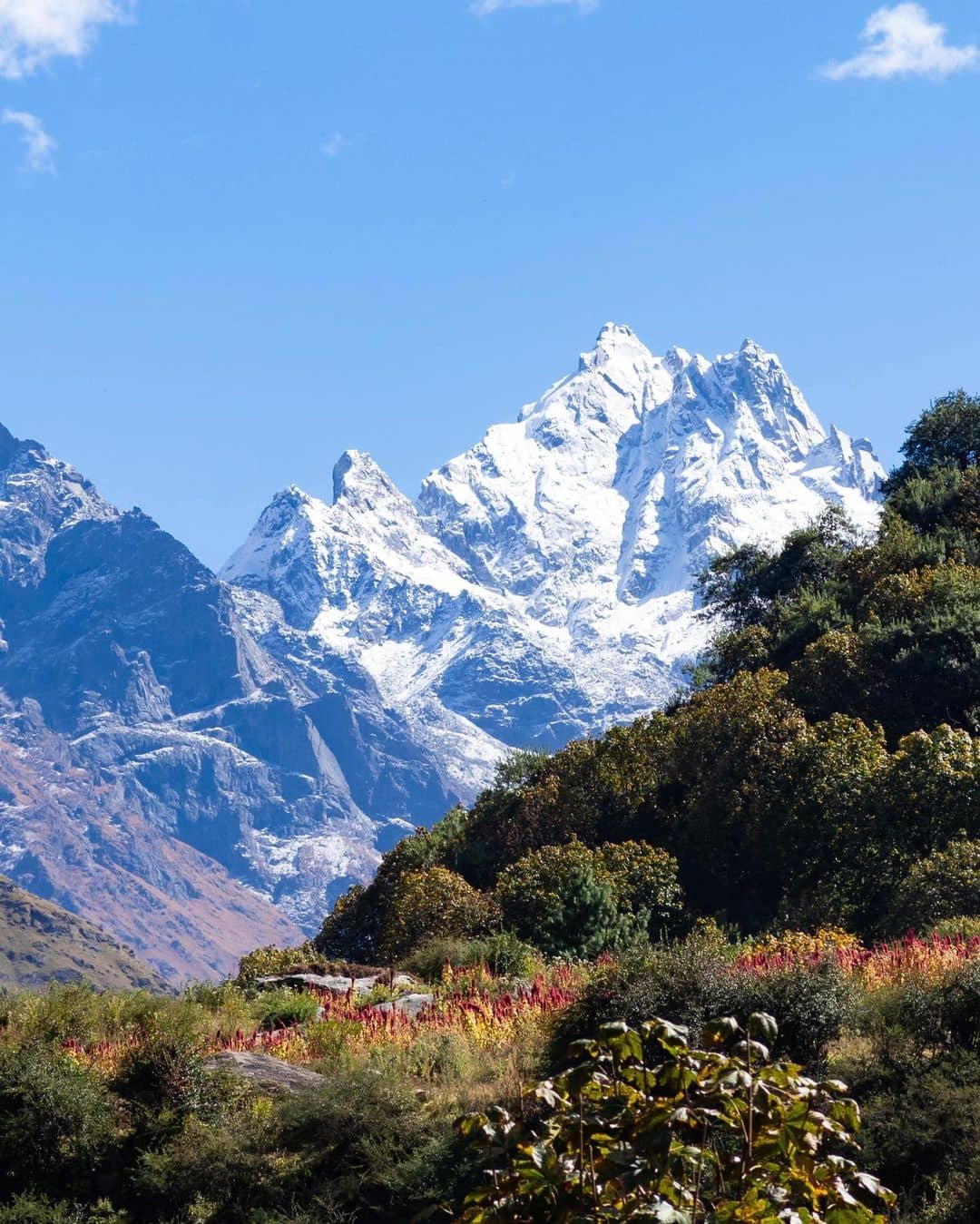
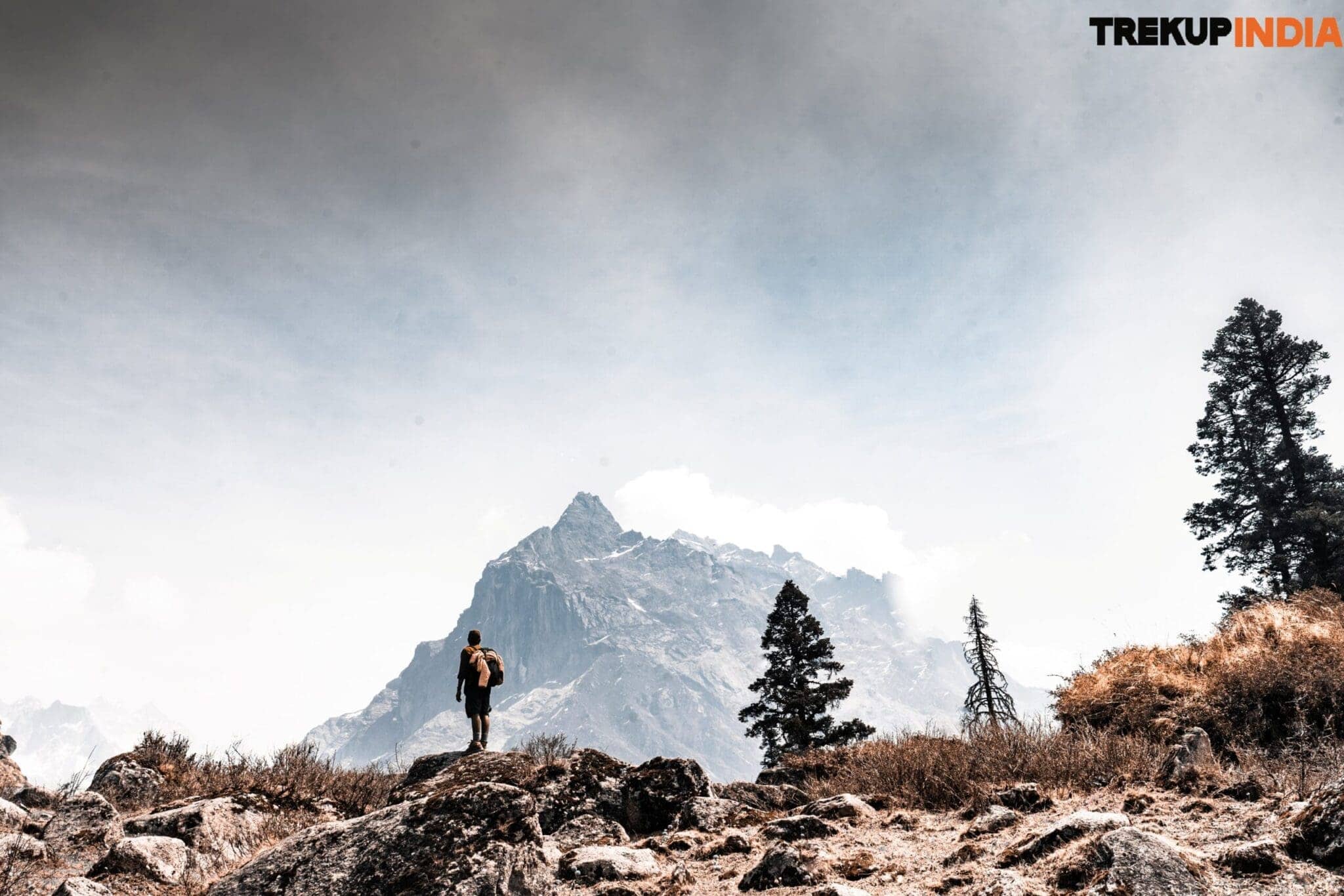
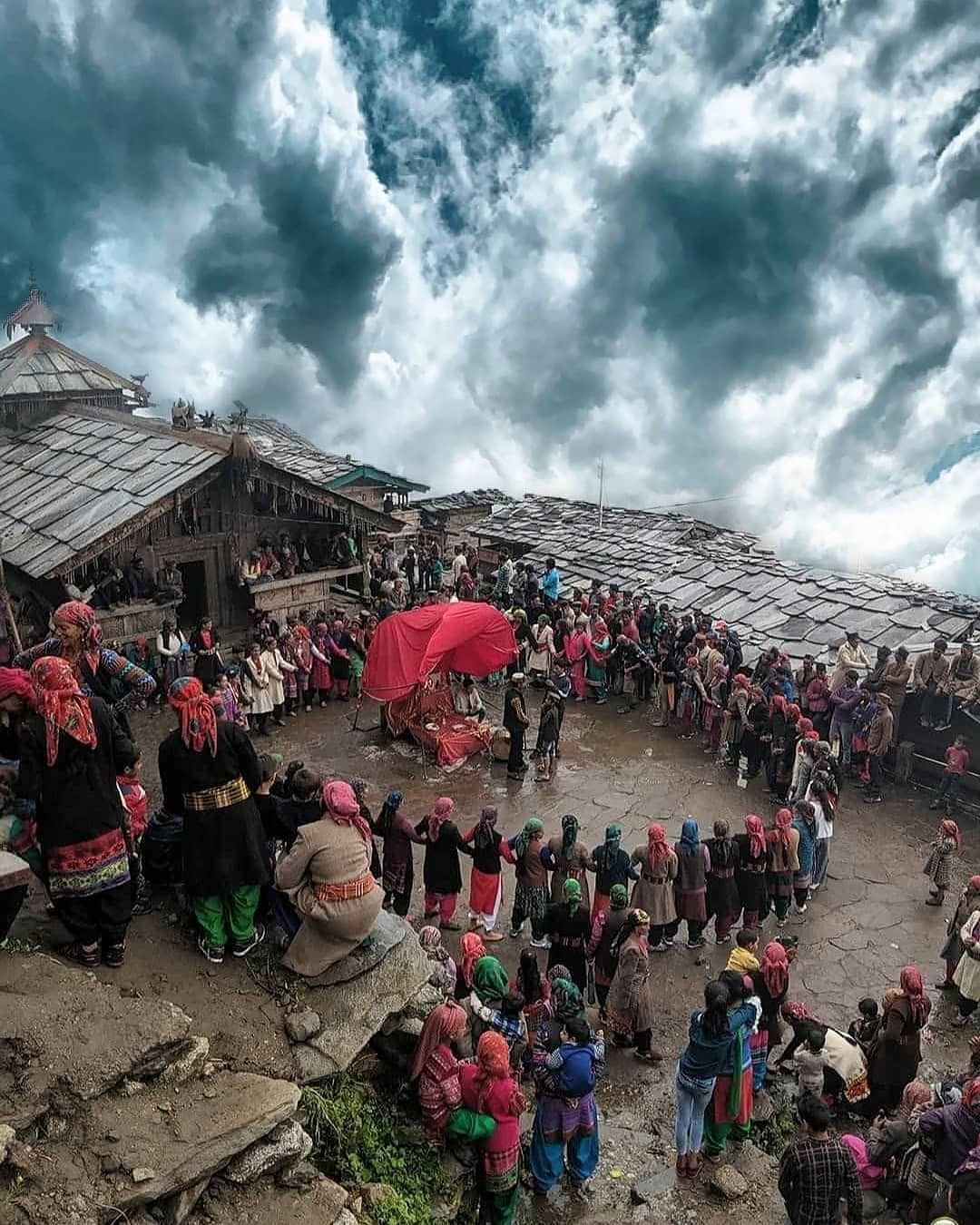
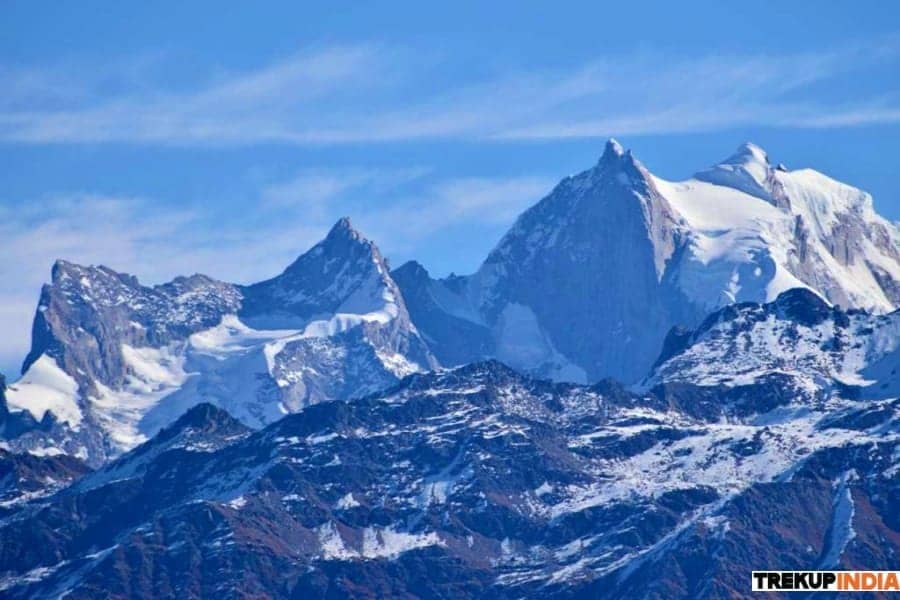
The Har Ki Dun Trek is one of the beautiful mesmerizing valleys in the Garhwal region. It is also known as the Valley of God with an elevation of 11,700 ft high in Govind Pashu Vihar National Park (Uttarakhand), and is considered to be one of the most picturesque valleys in the Himalayas. This 'cradle' valley of gods has deep connections to Vedic mythology, as it is believed to be the route taken by the Pandavas before reaching heaven via the stunning Swargarohini Peaks, Bandarpoonch Peak and Black Peak that tower above the valley floor. The trek is a moderate 42-kilometre starting from the picturesque base camp of Sankri, taking you through ancient wooden villages, such as Osla (2000 years old), allowing trekkers to experience a unique form of life that has changed little since ancient times, in the midst of dense chestnut and deodar forest. The Har Ki Dun trek is one of India's most famous trekking destinations due to its distinct cultural legacy, paths along the banks of the Supin River and breathtaking views of the mountains covered in snow.
Why is the Har ki Dun Trek so special?
1. The Hanging Valley structure
It exhibits glacial discordance (the large difference between the eroding power of the larger/main trunk glacier versus the smaller/secondary, or tributary, glacier). An example is seen in Har Ki Dun, which is a hanging valley that is well-known in the area due to the smaller tributary glacier being unable to effectively erode its way down from the summit (trunk glacier), thereby creating an abandoned hanging valley.
- The step feature: has an elevation change that is hard to believe due to the step elevation almost 500 meters (1,640 feet) vertically, all within a measurable distance of less than a meter. The reason for such an elevation change is due to the carver action of the Supin River cutting the gorge below, while the Har Ki Dun glacier remained above it.
- The Amphitheatre Basin: Unlike the typical V-shaped valleys of the Himalayas carved via water erosion and the more typical narrow 'U' shaped valleys, this basin is a Macro Wooden-Basin. The Jaundhar and Swargarohini glaciers were massive blocks of ice and would have been difficult to transport as a result. The upper reaches of each would have acted like a giant grinding stone and sanded down the valley floor, thus creating a flat and wide meadow up to 1.5 km in width.
2. The Kath-Kuni Structure: (seismic engineering/construction)
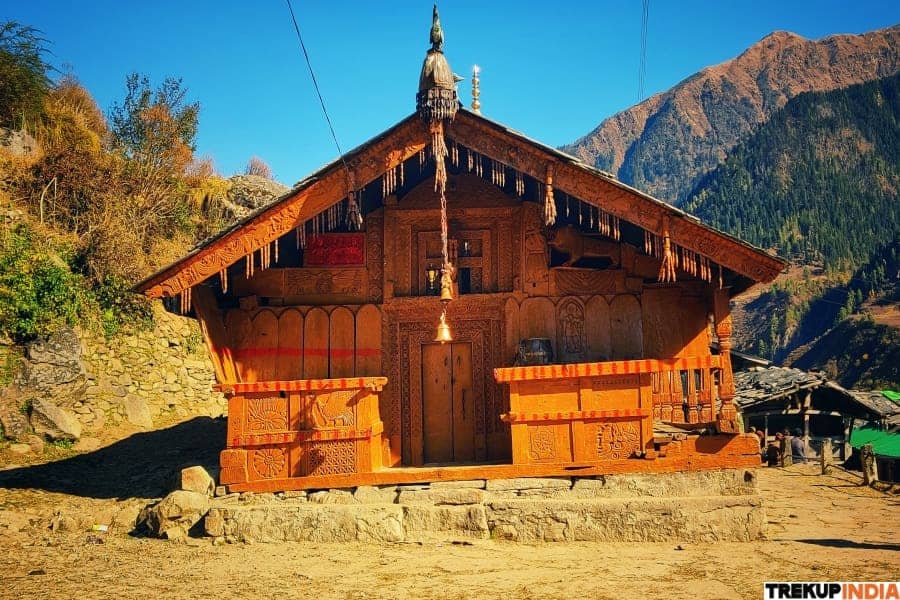
The architecture of Osla and Gangad serves as a great example of the use of indigenous design methods to protect against seismic activity.
- The Sandwich Approach: The deodar (Himalayan cedar) is a soft wood with a high resin content and therefore resistant to rotting. The fact that this system does not require mortar is intentional. During seismic activity, the interlocking timber and stones will shift and rub against each other, serving as a means of absorbing and dissipating (through friction) the kinetic energy caused by the event.
- Thermal and Snow Management: In addition to being aesthetically pleasing, the cantilevered balconies create a 2–3 m dry zone beneath the house, where the villagers keep livestock and firewood. The environment on these balconies is crafted with cultural significance through the use of decorative carvings featuring the Brahma Kamal flower and various species of ferns endemic to the region of Rawain.
3. River Benchway Trail (Fluvio-Glacial Terraces)
The trail's "Constant Gradient" is due to fluvial terraces that are flat parcels of land that were once the riverbed thousands of years ago.
- Ancient Floodplains: Instead of trekking along the ridges, you will walk along these "Benches" to maintain a constant heart rate and oxygen consumption, making this an ideal long-distance endurance trek as opposed to a vertical struggle.
- Confluence Dynamics: Downstream from Osla, the Ruinsara Gad flows into (dark, sediment-heavy) Supin (clear blue, carrying meltwater from the Ruinsara region). The demarcation line in the river creates a feature called a confluence plume which can be seen for several hundred meters downstream.
4. The Bhojpatra Transition (as Bio-Indicator)
The transition at 11,000 ft marks the Ecological Timberline where the hardiest coniferous species give way to specialists that thrive at greatest elevations.
- The Bio-Indicator: The Bhojpatra (Betula utilis) is the last tree species to grow before the start of the alpine meadow zone. The peeling characteristic of this tree is an adaptation that allows it to shed the moss and fungi that would cause decay in the high humidity snow zone.
- Ecological Niche: This area is classified as a high-quality habitat because of its ecological importance to the Himalayan Monal (Lophophorus impejanus). The Monal feeds on roots and tubers found in the moist, soft earth below Birch trees. The trail runs through the centre of this specific grove and thus the trekkers that walk through it are entering an area that has been identified as a wildlife corridor and therefore have an increased chance (90% probability) of spotting a Monal during the early morning.
5. The 'Swargarohini' Visual Anchor
- Vertical Relief: The 2,700m slope of Swargarohini I is an absolutely massive structure with a staggering visual elevation of 6,252m when viewed from the base of the mountain (3,566m). This creates a visual angle of about 45 degrees when viewed from the campsite making the mountain appear as if it is falling on the viewer.
- Physical Verification of a Myth: The 'Four Peaks' are not simply points on a map; they are four completely unique stepped ridges. For a traveler 2,000 years ago, the four massive stepped ridges made of perennial ice looked very much like a staircase. The data that backs up the myth shows that the ridgelines of the massif contain a stair-stepped shape which is physically separated by roughly the same vertical stair-step interval. Therefore, the ridgelines form a literal stair-step geometry unique to this massif.
.jpg&w=3840&q=75 "Trek highlight")