Maximum Altitude
15,250 ft.
Trek Duration
6 Night / 7 Days
Trek Distance
41 Km
Difficulty Level
Moderate to Difficult
Start/End Point
Old Bus Stand, Shimla
Nearest Airport
Chandigarh International Airport
Best Season
May / June & Sept / Oct
Accomodation
7 days stay in a dome styled tent.
Meals
Breakfast, lunch, evening snacks and dinner
Permits
Forest Department & Trekking permit
Temperature
13°C to 18°C (Day), 0°C to - 5°C (Night)
Snow
December to February
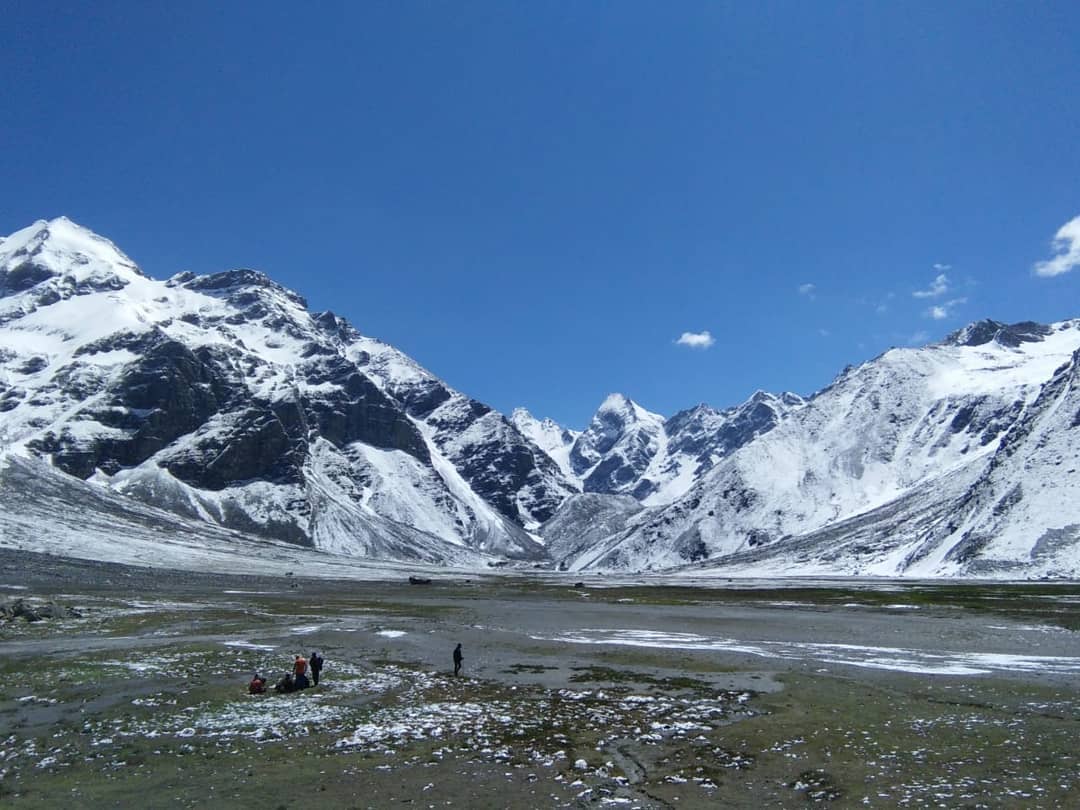
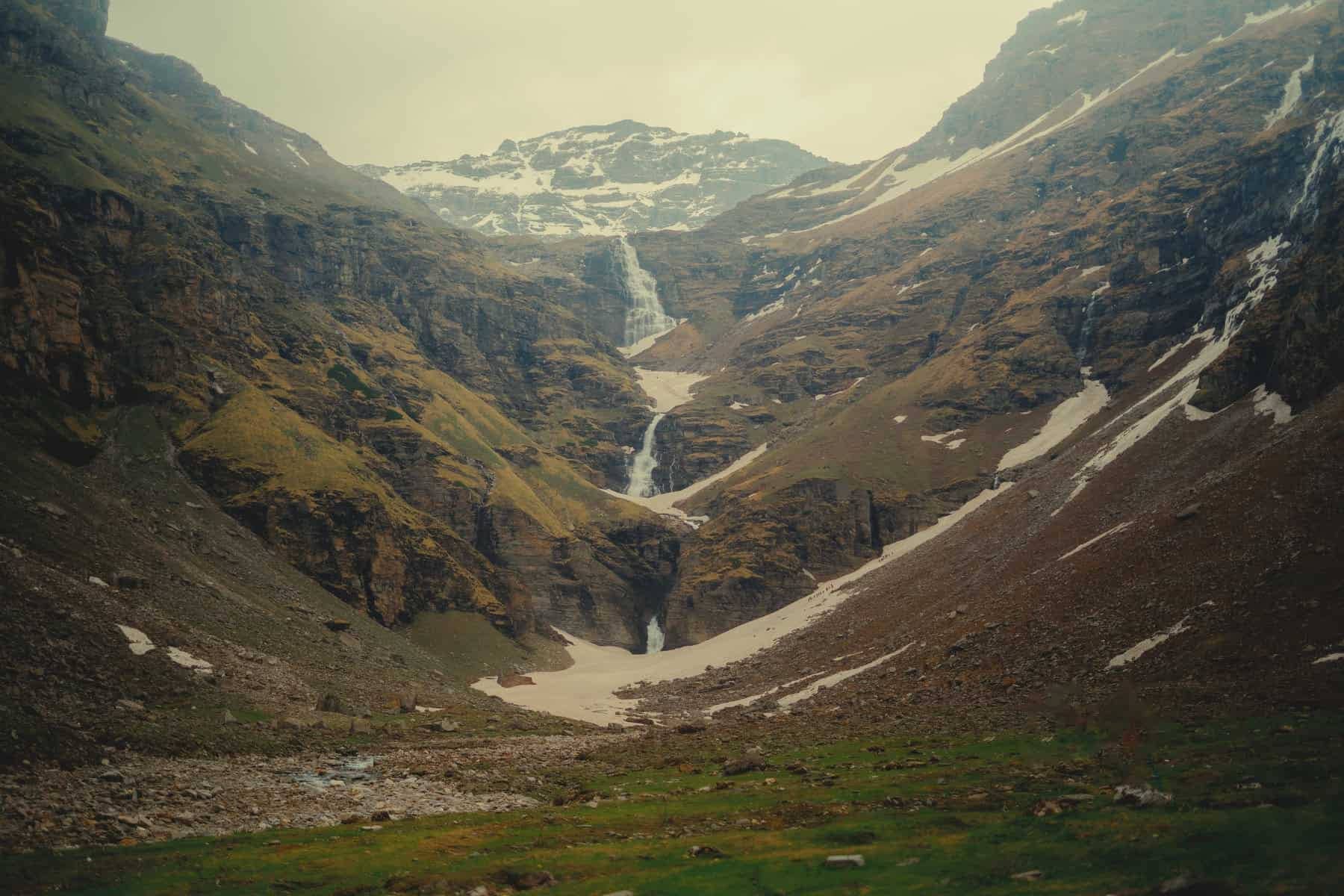
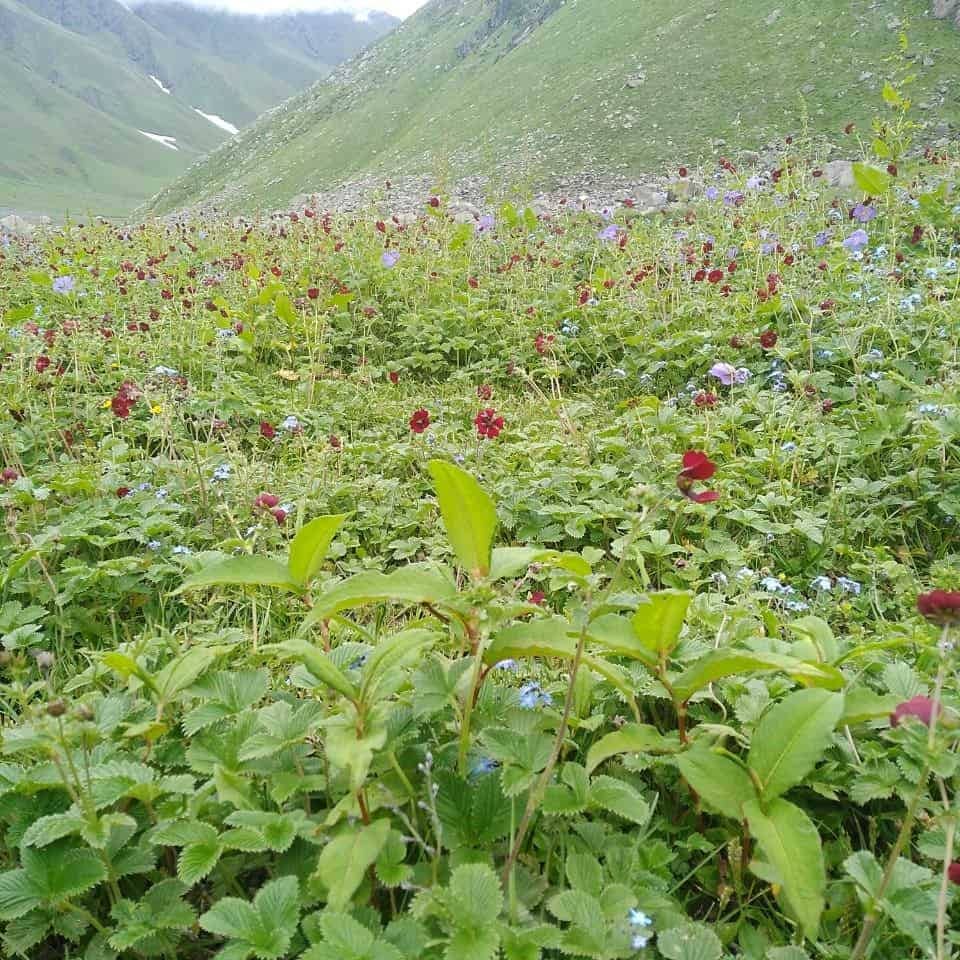
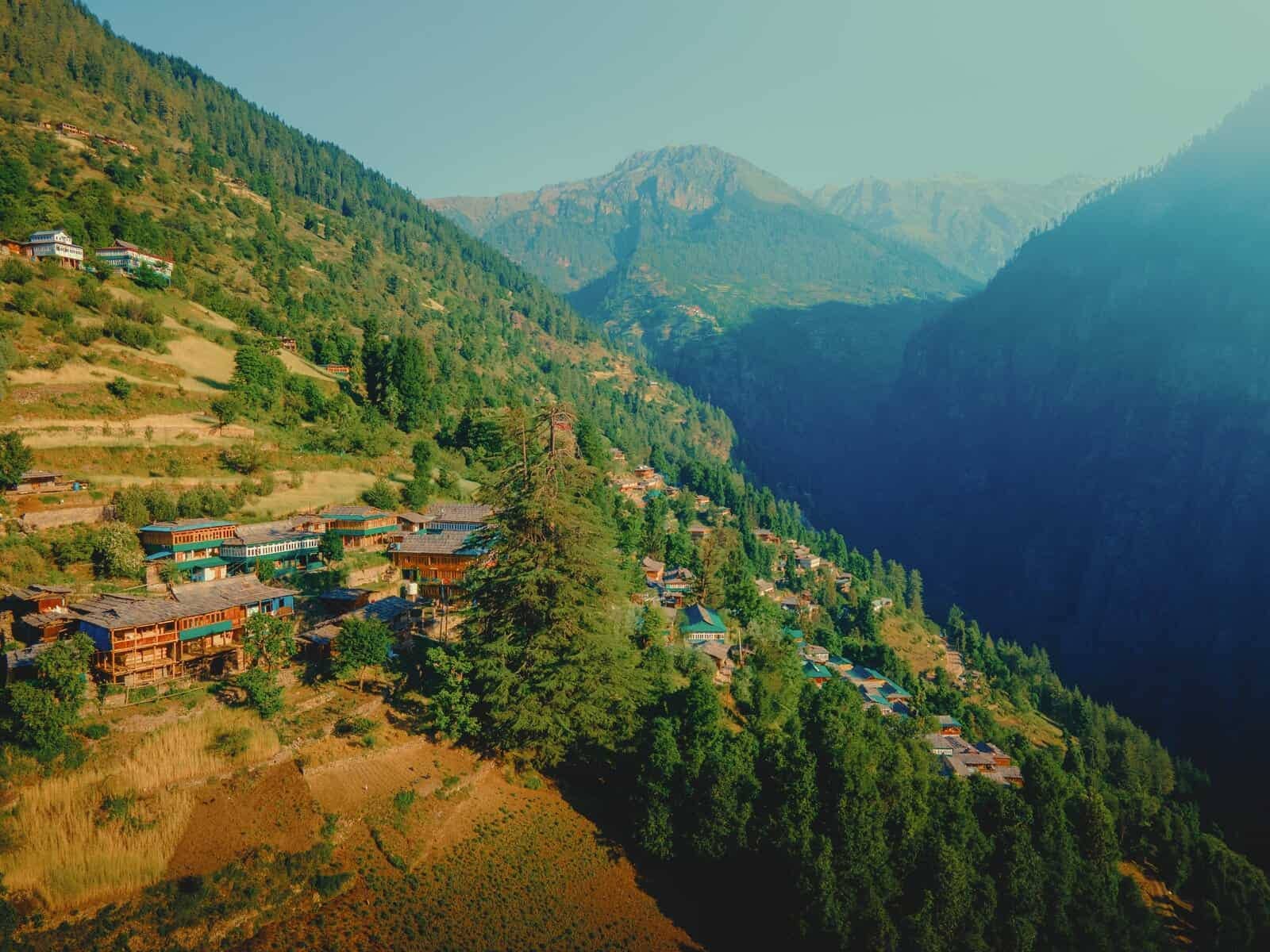
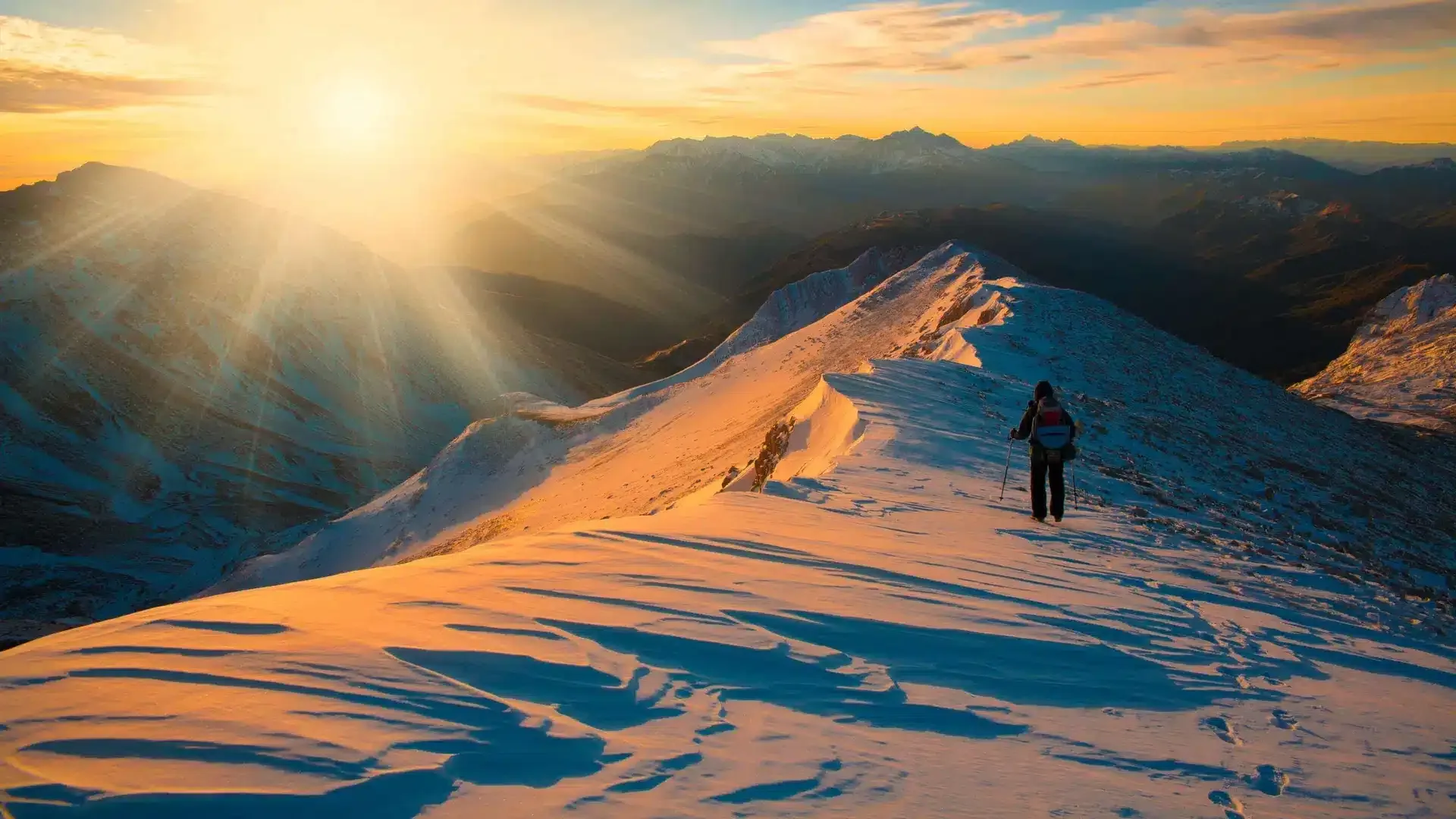
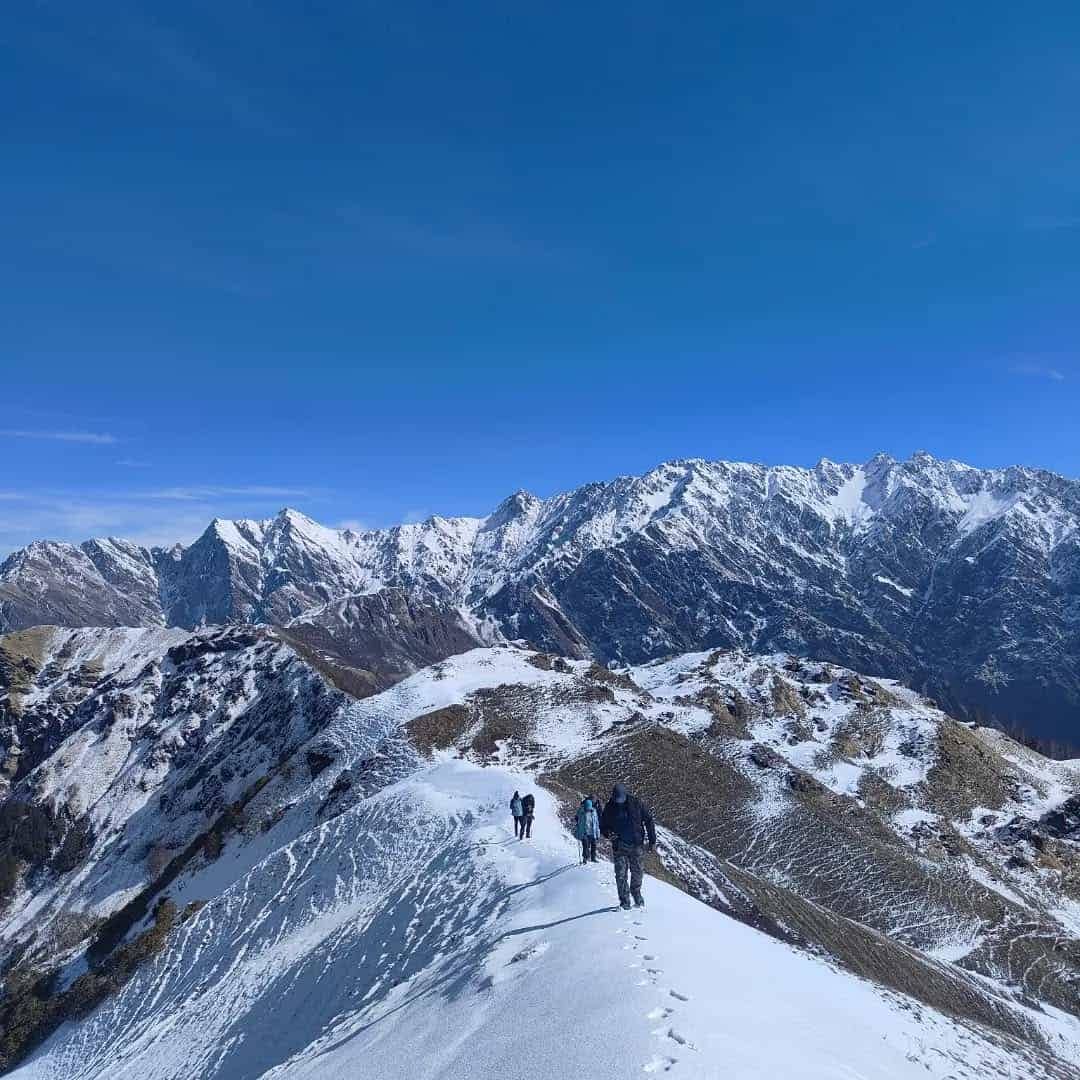
The Rupin Pass is the most scenic trek through diverse landscapes changing from lush green valley to snow covered mountain peaks. It is an incredible high-altitude trek that connects the rich, green cultures of Uttarakhand to the severe, harsh beauty of Himachal Pradesh. The trek takes you to over 15,250 feet in altitude and is known for its stunning transitions with each bend in the trail revealing radically different landscapes, such as fragrant pine and rhododendron forests in Dhaula. The amazing hanging villages of Jakhu, to the expansive alpine meadows in Saruwas Thatch. The highlight of the trek is the majestic three-tiered Rupin Waterfall, where the trek crosses a thunderous glacier-fed stream in order to set up camp. In order to complete the trek, trekkers must possess both physical strength and mental toughness, particularly as they navigate the adrenaline-producing scramble through the Gully, which is a narrow, nearly vertical view of snow that occurs just before the summit. Once trekkers reach the pass, they are rewarded with breathtaking views of the Kinnaur Kailash Range as well as a steep descent into the turquoise Baspa Valley; thereby making this trek an ideal adventure for those looking for an unparalleled trekking experiences that combines cultural enrichment with raw, technical challenge.
The Rupin Pass trek is frequently referred to as the crown jewel of trekking in India due to its vast assortment of dramatic scenery. It is not simply a trek but rather an expedition where one feels as though they have taken a film journey through numerous variations of landscape at a very high mountain altitude. The following details outline why this trek is extraordinary in every way:
1. The Incredible Kaleidoscope of Landscapes: Many of the Himalayan treks have their own signature terrain; for example, a lot of meadows or a high-altitude desert. The main distinction of the Rupin Pass is that it has all of these types of terrains. You will experience a wide variety of landscapes within just 8 days; from tropical-style fruit orchards and dense oak forests to enchanted tunnel rhododendrons and ancient white-barked birches (known as Bhojpatra), to finally emerging into an arctic-like basin dominated by glaciers that are reminiscent of the surface of the moon. This is a significant distinction between Rupin Pass and other treks: each day you can see views that are different from what you could see on previous days.
2. Vertical Three - Tier Waterfall Navigation: The three-tier waterfall is probably one of the most famous features on most Indian treks. Waterfalls are usually a far-off sight or a quick stop for a picture, but on the Rupin Pass trek, the waterfall is the trail. For two days, you'll trek along a thunderous waterfall that plummets 1,500 feet above you. The design of the Rupin Pass trek will have you camping at different elevations of the waterfall, culminating with your arrival at the Upper Waterfall Snout. To wake up at 13,000 feet on a tiny ledge made of rock is an exhilarating experience that you cannot find anywhere else.
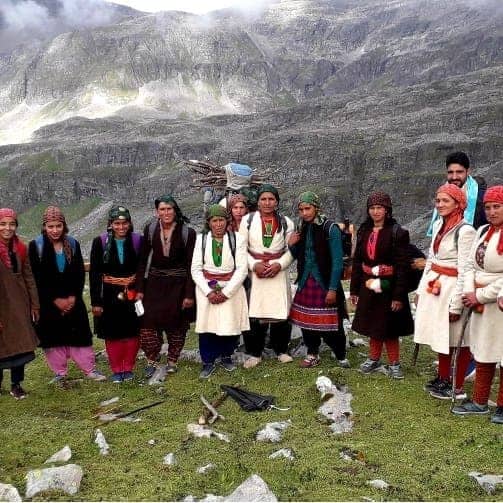
3. The Cultural Heritage of The Hanging Village (Jakha): On this trekking trail, you will have the opportunity to experience ancient life in the Himalayas as you visit the village of Jakha. This village is called the Hanging Village because of its location on the steep side of a vertical cliff; you will be able to enjoy seeing the amazing Kath-Kuni architecture as you trek through the village. Witnessing a community live and thrive in such a challenging environment is a cultural experience that will add depth and meaning to your physical adventure.
4. The Technical Gully Snow Scramble: A notable aspect of the final summit push is the fact that a portion of it is steep, snowy, narrow and defined by a 70° steep slope of combined snow and rock called the Gully. Trekking trails usually consist of straightforward trekking, but the Gully will require the use of your hands, stepping into the snow, and having a mountaineer's way of thinking. The Gully is the most intense and high-stakes experience of your life at 15,225 feet which will give each trekker an overwhelming sense of accomplishment.
5. The Continental Watershed & Kinnaur: The summit is not just a high point; it's a geographical boundary. When on the narrow ridge of the summit, you are standing on a watershed: if you drop water to the south it becomes part of the Rupin River and eventually the Bay of Bengal; if you drop the same water to the north, it feeds the Baspa and eventually ends up in the Arabian Sea. The actual scientific wonder of this divide is only overshadowed by the Curtain Drop - the moment your head clears the pass, you will see the Kinnaur Kailash range which is a massive, jagged, and important part of the Himalayas in its entirety and often represents the single most emotionally moving point of the trek.