The Rupin Supin Trek: Discover the Hidden Gem of Uttarakhand’s Himalayas. Tucked away in the Western Garhwal Region of Uttarakhand, the Rupin Supin trek is a lesser-known gem that seamlessly weaves together tranquillity and cultural heritage. This scenic trek links the stunning valleys of the Rupin and Supin rivers, providing adventurers with a rare chance to experience pristine mountain scenery, quaint villages, and awe inspiring vistas from lofty heights, with the legendary Vijay Top offering a particularly spectacular panorama.
Covering 6 days, the Rupin Supin trek adventure begins with a picturesque 235 km drive from Dehradun to Khanyisani Base camp. The path then winds through pine forests, alpine meadows, and secluded campsites such as Sarutal and Badang, gradually ascending in elevation. The most thrilling segment of the expedition occurs on Day 4 as hikers conquer Vijay Top at an altitude of 12,467 ft, the highest peak along the Rupin and Supin trek path, before descending into the Supin valley towards Bhitari village. This transition from one valley to another adds a unique and fulfilling aspect to the trekking experience.
The Rupin and Supin trek spans approximately 32 km, featuring moderate inclines. Typically taking five days to complete with an additional day for the return journey, it is considered a perfect mid-length Himalayan trek. This trek is classified as moderate in difficulty and recommended for individuals with some trekking experience or a reasonable level of physical fitness.
The Rupin and Supin trek is accessible throughout the year, but it is recommended to visit between November and March or July and September for the best experience. During these times, you can enjoy the snow, vibrant green paths, and blooming flowers in the monsoon season. The area is surrounded by the Rupin and Supin rivers, providing a wonderful blend of nature and local culture.
Before diving into the details of the this trek so unique. To give you we’ve outlined the key highlights of the Rupin and Supin Trek, showcasing what makes this adventure truly exceptional.
The journey spans 454 km by taxi and 32 km by foot, to be completed over 6 days and 5 nights. The route begins in Dehradun, passes through Mussoorie, and leads to various destinations including Khanyisani Base camp, Fhitari, Jakhol, and Sankri, which serves as the gateway to over 30 treks in Uttarakhand.
Rupin & Supin Trek is a relatively low-altitude mountain adventure, reaching a height of 3800 meters. The initial trail is considered easy to moderate, making it an ideal choice for school groups, families, and novice trekkers. To brave the sub-zero temperatures, it’s essential to pack the right gear and clothing. This trek offers a breathtaking panorama of the Himalayas, with picturesque pine forests, diverse flora and fauna, and a glimpse into authentic Garhwali culture. Take the time to engage with local guides, who will regale mythology and share insights into the region’s customs. With stunning vistas around every bend, don’t forget to bring a camera and extra batteries. Be mindful of your backpack’s weight, keeping it under 10-12 kg. A highlight of the trek is the serene walk along the Rupin and Supin rivers, which winds through lush forests, open ridges, and secluded valleys, accompanied by the soothing
Discover the enchanting landscapes and rich cultural Rupin and Supin Trek. This trek offers a diverse and thrilling experience, with breathtaking vistas of lush meadows, quaint villages, snow-capped peaks, vibrant fields, and majestic rivers. As you venture into the uncharted territories, you’ll have the opportunity to witness a wide range of flora and fauna, and gain insight into the local way of life. The uniquely situated Bitari village, per, offers a stunning panorama. The multi-tiered Bitari temple, meanwhile, provides a fascinating glimpse into the traditions and customs of the Garhwali people.
Our journey to the charming village of Bhitri, the initial stop on the Rupin Supin Trek. Perched at an elevation of 1554 meters above sea level, this quaint village boasts traditional wooden houses elevated on stilts, a serene temple, and a vibrant cricket-loving community. We pause to observe a group of enthusiastic young players, who, despite their rural surroundings, demonstrate a remarkable understanding of the game, mirroring the skills and idolized cricket stars.
This section provides a comprehensive, simple explanation of the Rupin Supin Trek, including general day-to-day routing, elevation gain, etc. The basic itinerary is designed to give an overview of the trek; all-inclusive itinerary allows for a more in-depth understanding of the various distances between campsites, the nature/type of terrain that trekkers will be traversing, and the locations of the campsite relative to one another.
In addition to the above, the trek map indicates the specific route of the trekking path, village locations, forest locations, and campsite locations within the trek area enabling trekkers to imagine their trek through snow-covered coniferous forests and alpine meadows. The elevation chart clearly indicates the total elevation gained and lost each day of the trek ensuring that trekkers can prepare adequately before arriving at the basecamp, acclimatize safely to altitude, and have a positive experience on their overall trek.

Expert Advice: Your journey begins early at 6:00 am, so ensure you arrive at Dehradun Railway Station on time to begin your scenic drive.
Expert Advice: The path climbs gradually into dense pine forests, so maintain a steady pace to enjoy the stunning views of Changsheel Valley.
Expert Advice: The path winds through multiple gorges and streams, providing excellent spots to rest and take in the panoramic views of the Swargarohini mountains.
Expert Advice: The ascent to Vijay Top is steep, but pacing yourself will reward you with an explosion of color and breathtaking panoramic views from the summit.
Expert Advice: Take a moment to visit the Someshwar Temple on the banks of the Supin River, as it is an important site of worship and culture for the locals.
Expert Advice: Collect your certificates of completion and capture final group photos before the vehicle departs towards Dehradun early in the morning.
Your journey through Trekup India begins at 6:00 am at Dehradun Railway Station. Our cars are waiting to pick you up, to begin your scenic drive to Bhitri or Khanyisani Village. The route passes by Rajpur Road, giving you an insight into the charm of Dehradun. After about one hour or so, we get to Mussoorie which is known as one of the cities known as the “Queen of Hills,” and then stop off near Kempty Falls for breakfast. There, you are able to relax and admire the scenery over the course of about an hour. The route continues on the sacred Yamuna river. The short stops can be used to take photos or just enjoy the view. On the way, you’ll traverse small market areas such as Nainbagh, Damta Nainbagh, Damta and Naugaon. At around 1:30 pm the stop is Purola to eat lunch. The way from Sankri through Jarmola provides an unpaved zigzag road surrounded by the thick pine forests. After crossing Mori as well as the checkpoint at Naitwar and the check post at Naitwar, we arrive at Khanyisani Camp by late in the evening. Take a hot cup of tea or a snack on our beautiful homestay / campsite.
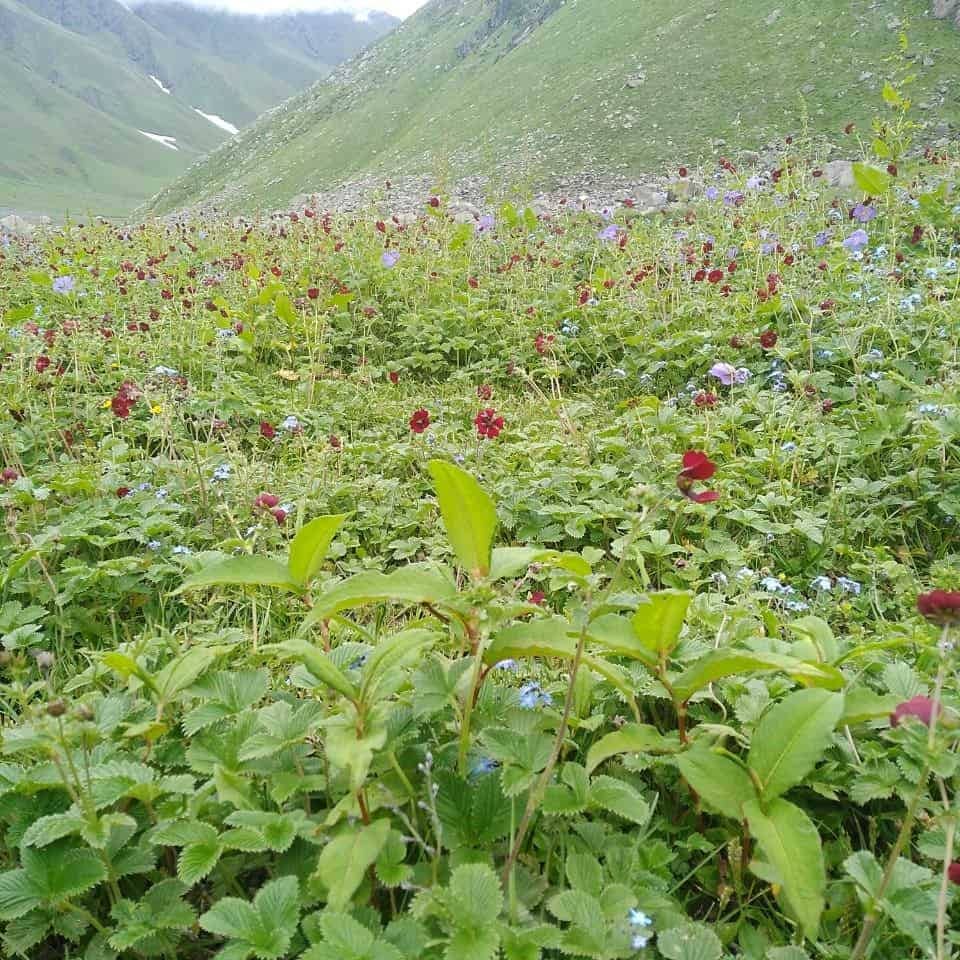
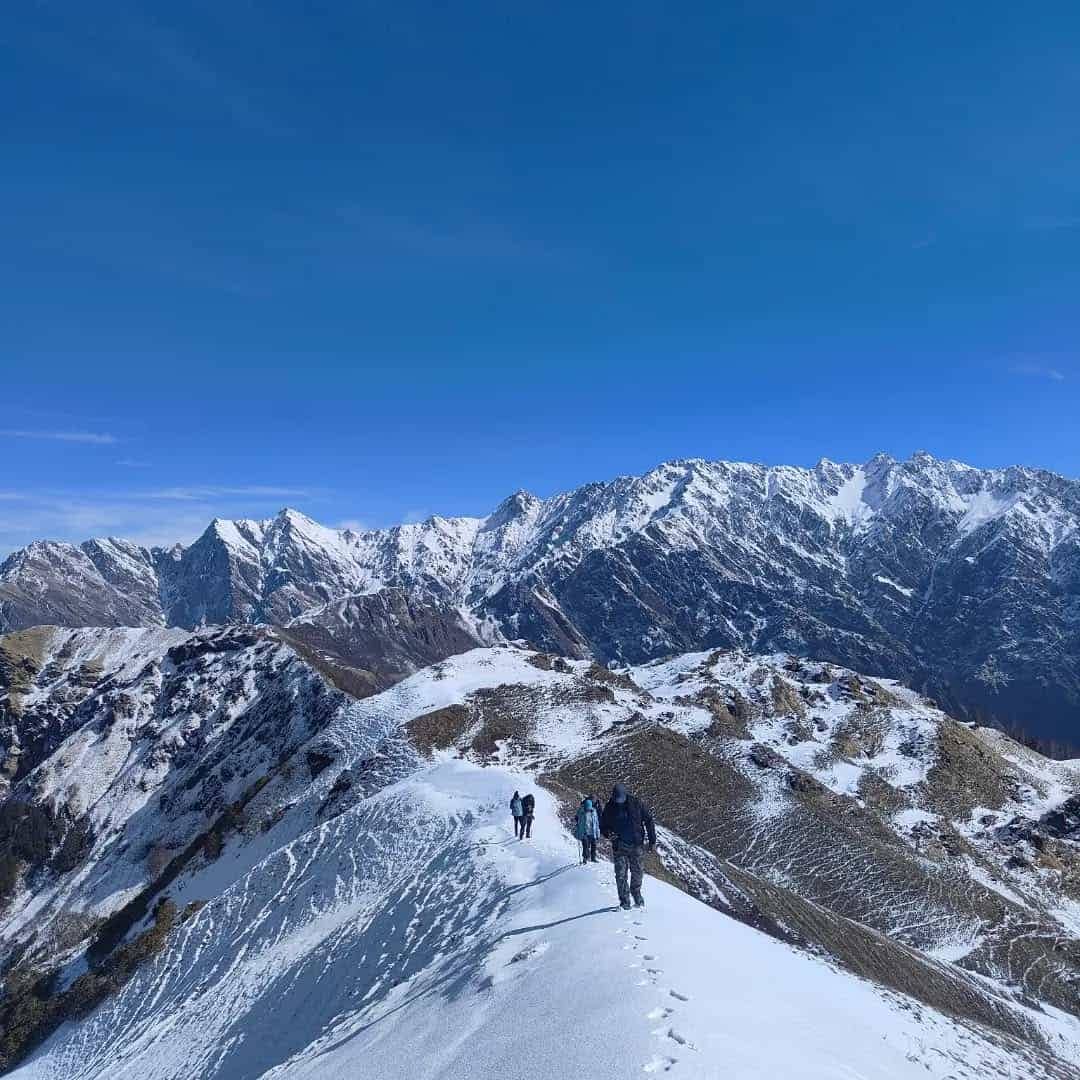
The Rupin Supin Trek features great sights along the trail such as snow-covered forests, beautiful summit views, campsite life, and experiences while trekking. By using real photos and videos along with these images, you will have the ability to find out what your trek and terrain will look like, and give yourself an idea of what sorts of trekking await you before leaving for your Rupin Supin Trek .





Dehradun Railway Station (station code: DDN) is well-connected to the major Indian cities such as:
Recommend to reach Dehradun one day prior to you start the trek, or get an overnight train, which will arrive in the early hours of the morning (between the hours of 5:00 am and 7:15 AM) the day 1.
The closest airport to the city is Jolly Grant Airport (DED), located about 25km away from Dehradun city.
Dehradun is connected to National highways
To ensure a smooth experience:
Trekking with us for the Rupin Supin Trek is entirely safe because we have a team of trek leaders qualified in Wilderness first-aid and complete information about the high-altitude glitches. During the trek, we carry a full first-aid kit that contains all the essential medicines. Before trekking with us, you must ensure that you are medically fit for the trek; for us, your medical fitness is more important than anything else.
Right from our establishment, we at Trekup India have been continuously introducing new safety practices into Indian trekking to ensure the safety of voyagers. Trekup India introduced microspikes and made emergency bottled oxygen mandatory for all treks. Our trek leaders take your daily Pulse oximeter reading. We at Trekup India introduced the radio walkie-talkie as a safety communication device.
We have noticed that most trek-organizing organizations do not follow these systems, but with time, they are following us; several competing companies are adopting these practices and organizing great, safe treks.
We ensure complete technical safety in the mountain. Our company has a vast team of more than 100 guides and trek leaders who serve on Himalayan treks. One of the best things about our team is that all the members are trained professionally by the Nehru Institute of Mountaineering, Indian Mountaineering Foundation Delhi, and Hanifle Center Outdoor Education Mussoorie.
To ensure a perfect Trek, we have introduced some new safety checks to ensure excellent safety for our trekkers.
At Trekup India, you will find a team with local knowledge and fluency in English and Hindi. This helps ensure that you have a fantastic trek. Not only this, but we also pay attention to your health and safety because this is something we cannot ignore. All the team leaders involved in trekking have already undergone several professional courses in first aid, portable altitude chamber training, CPR, environmental awareness training, and advanced wilderness emergency medicine.
We also carry a complete first aid medical kit on every trek and trip we organize. Apart from the medical kit, we take a portable altitude chamber (if needed) and medical oxygen for all high-altitude treks. Our company has significant expertise in organizing all sorts of group adventure holidays for family groups, school and college groups, and friend groups. We have many travel options that suit different fitness levels and travelling styles.
Regardless of the group size, we value each and every member of our trekking groups. Our commitment to personal attention ensures that your needs and safety are always our top priority.
Trekup India has been a stalwart in the Adventure Tourism industry for 30 years. Since our inception, we have been dedicated to providing top-notch treks, voyages, trekking programs, and high-altitude expeditions. Our extensive experience is a testament to our commitment to your adventure and safety.
We organize treks in Uttarakhand, Kashmir, Sikkim, and Himachal while being part of the trekking community; we feature more than 75 documented Himalayan treks. In addition to other outdoor activities, our company also organizes trips for schools, colleges, and families.
Therefore, we maintain the quality of services offered to our valuable customers.
| Item | Characteristic Feature | Pro-tip |
|---|---|---|
Waterproof, Ankle-Height Trekking Boots | These are high quality boots with stiff rubber soles that prevent water entry. | Must be fully broken in. Good with a deep aggressive grip to avoid injury in toe or fingers. |
Trekking Poles (Pair) | Provide 2 additional points of contact for stability on snow / ice and reduce impact on knees while descending. | Use them together to distribute the weight of your pack, this can reduce stress on your knees and ankles. |
Waterproof Gloves (2 pair) | Protects against cold injury. Having two pairs that allows warmth while protecting your hands. | Keep the shell of gloves dry for a waterproof layer for handling snow and keep the inner liner for warmth. |
Gaiters (required) | Create a seal between your boots and trousers to prevent snow from entering your boots / sock. | Put your gaiters on as soon as you reach the snowline; avoiding snow wetting your socks / boots minimizes risk for cold injury. |
High-Grade SPF Sunscreen and Lip Balm | Protects against severe sun / wind burn. It is important for exposed skin at high altitude due to reflection from snow. | Reapply sunscreen to face, neck, and ears every 2 hours spent on the snow. |
Sunglasses (Category 4) | Highest level of protection required to protect against temporary blindness (photokeratitis) | Do not remove sunglasses when you are on the snow because snow can reflect 80% of UV light back into your eyes. |
| Category | Item | Specification & Reason |
|---|---|---|
Headwear | Warm Beanie / Balaclava | Must be thick wool or fleece; cover the ears completely. Important in retaining body heat, as a large percentage of body heat is lost from the head. |
Wide-Brim Sun Hat or Buff | Light material (hat) or synthetic tube (buff). Protects face, neck, and scalp from high-altitude UV radiation from the sun. | |
Upper Body | Moisture-Wicking T-Shirts (2) | Choose Synthetic (polyester) or thin Merino wool; short or long sleeve because cotton actively makes you cold and uncomfortable when you sweat. |
Thermal Base Layer (1) | Mid-weight Merino wool or synthetic long-sleeve top. Provides immediate insulation; it will lock in body heat as the starting point of your heat-trapping system. | |
Fleece Jacket (1) | Mid-to-heavy weight (200-300 GSM) fleece or softshell jacket full of insulation. This layer provides the best warmth-to-weight ratio It can be worn alone or under your shell. | |
Insulated Puffed Jacket (1) | Down or synthetic insulation; rated for 0∘C and below. Your main source of heat protection for cold night camping, evening, and the summit push when below freezing conditions are anticipated. | |
Waterproof & Windproof Jacket (1) | Shell material (e.g. Gore-Tex equivalent) with taped seams. Your outer barrier (shell layer) keeps the rain, snow and penetrating wind out from the mountains. | |
Lower Body | Quick-Dry Trekking Pants (2) | Synthetic, lightweight, and preferably stretchable or convertible. Durable for comfortable walking, fast drying after getting wet from rain or snow. |
Thermal Base Layer (1) | Mid-weight thermal bottoms (wool or synthetic). Vital layer of insulation under your trekking pants in cold walking conditions at camp. | |
Waterproof Rain Pants (1) | Lightweight, packable shell pants. These will protect your trekking pants and base layers from getting wet when it's snowing or raining heavily. | |
For Feets | Create a seal between your boots and trousers to prevent snow from entering your boots / sock. | Put your gaiters on as soon as you reach the snowline; avoiding snow wetting your socks / boots minimizes risk for cold injury. |
Trekking Socks (4-5 pairs) | Wool or some kind of synthetic blend (not cotton). 1-2 pairs should be extraordinarily thick for nights. These will manage moisture in your foot to reduce blisters and provide warmth at night sleeping in a bag or in boots! | |
Camp Shoes | Lightweight sneakers, sandals, or slippers. You'll want these to dry out your trekking boots and let your feet rest when at the campsite. |
| Category | Item | Important Notes |
|---|---|---|
Backpacks | Main Rucksack (50-60 L) | For Porter. Good frame of posture and hip belt required. |
Daypack (20-30 L) | Daily carry. Must have water, layers, snacks, camera, and gloves in your daily essentials. | |
Sleeping bag & liner | Sleeping Bag (Rated to −10∘C / 14∘F) | Confirm if Trekup India provides a sleeping bag; if you're renting your bag, make sure it is a reputable outfit. |
Sleeping Bag Liner | A liner adds additional warmth and keeps your bag clean. | |
Hydration | Insulated Water Bottles (2x 1L) | CRUCIAL: No hydration bladders (the tube will freeze). Insulated bottles will keep your water from freezing. |
Hydration Tablets/ORS | Make sure you have enough hydration tablets and/or Oral Rehydration Solution (ORS) which are important for replacing electrolytes lost at high altitude. | |
Safety & Navigation | Headlamp with extra batteries | Essential for crossing the pass started early in the morning. |
Basic First-aid kit | With plasters (Compeed!), Band-Aids, antiseptic, pain medication, and then any of your personal medications you might need. | |
Personal | Personal toiletries | Toothbrush, tooth paste, biodegradable soap, toilet paper (pack out!), and hand sanitizer. |
Quick Dry Towel | Material should be water absorbent with light in weight and small in size. | |
Power bank | There will be no place to charge devices on the trek. |
The concept of pricing is the key part of your trekking journey. It defines the value and experience you receive for the price you pay for your trek. For a structured high altitude trek, like Rupin Supin Trek operated by Trekup India provides transparency with the cost & amenities provided to our trekker. Inclusions provide clarity in respect to operator's responsibility; essentially every necessary service, logistical support, group equipment, and permit to have a safe and fully supported trek from start to finish while exclusions provide clarity in respect to individual's responsibility, for all expenses related to personal choice (like a porter), necessary contingency items (like insurance), or mandated fees examined outside the package price (like GST).
Total Trek Cost: ₹ 11,950 / person + 5% GST (Mandatory)
A structured 8–12 week training plan designed to build stamina, strength, and endurance for a safe and successful trek.
Exercises focused on improving stamina, heart health, and endurance to prepare your body for long trekking days.
Exercises aimed at building leg, core, and upper-body strength to handle steep climbs, descents, and carrying a backpack during the trek.
Techniques to improve lung capacity, oxygen intake, and breath control for better performance at high altitudes.
Practices to enhance mental focus, calmness, and resilience, helping you stay relaxed and positive throughout the trek.
A structured, week-by-week workout routine designed to gradually improve fitness, strength, and endurance in preparation for the trek.
| Day | Workout Focus | Week 1 Target | Week 2 Target | Week 3 Target | Week 4 Target |
|---|---|---|---|---|---|
| Long Endurance | Sustained hiking or walking with a good grip of boots. | 90 minutes | 100 minutes | 110 minutes | 120 minutes |
| Moderate Cardio | Walking, light jogging and cycling by maintaining steady pace where walking is possible | 30 minutes | 35 minutes | 40 minutes | 45 minutes |
| Intensity | Stairs, treadmill on incline or hill repeat | 20 minutes | 25 minutes | 30 minutes | 35 minutes |
| Day | Workout Focus | Week 5 Target | Week 6 Target | Week 7 Target | Week 8 Target |
|---|---|---|---|---|---|
| Long Endurance | Start carrying ¼ target pack weight | 2.5 hours | 3 hours | 3.5 hours | 4 hours |
| Moderate Cardio | Performing exercise at higher speed than before | 50 minutes | 55 minutes | 60 minutes | 60 minutes |
| Intensity | Increase the intensity of your repeats or steepness of incline | 40 minutes | 45 minutes | 50 minutes | 60 minutes |
| Day | Workout Focus | Week 9 Target | Week 10 Target | Week 11 Target | Week 12 Target |
|---|---|---|---|---|---|
| Long Endurance | Carry ½ target pack weight. Target daily trek duration | 4.5 hours | 5 hours | 6 hours | 5 hours |
| Long Endurance | Back to back sessions. This session is done on day 2 of fatigue. | 3 hours | 3.5 hours | 4 hours | 5 hours |
| Intensity | Maintain intensity but reduce volume slightly to allow recovery | 45 minutes | 45 minutes | 40 minutes | Rest or 20 minutes light walk |
Planning and organizing all essential gear in advance to ensure comfort, safety, and readiness throughout the trek.
The body’s gradual adaptation to altitude, terrain, and physical exertion to maintain health and performance during the trek.

Operations Manager
We have cretaed every trek guide from real ground operation experiences, not just from internet research.
Presonally I, our trek leaders, local guides & most importanly our experienced trekkers have done and explored these treks in different - different seasons and weather conditions. We have documented everything in detailed like trekking routes, trail condition, campsite locations, water sources, best time to do these treks, weather patterns and most importantly risky section, safety exicts.
Beyond ground data, we timely refine this information using -
We do not just aim to inform, you will find all informations & insights here which will help you to prepare for the trek, visualise the trek, and confidently complete the trek.
Now days peoples are not aware of trekking much - like most important saftey and accute mountain sickness (AMS) on treks, as we say trekking in Himalayas is not just travel like tourist destinations. it's an adventure activity that demands awareness, preparation, and respect for local culture & nature.
We created this guide to solve trekkers real problem - like most of the online information present is either outdated and not updated timely or written without firsthand trekking experience.
This page exists to -
Whether you are choosing your first trek or preparing for your next adventure, this guide is designed to feel you like advice from someone who has already been there and advicing you.